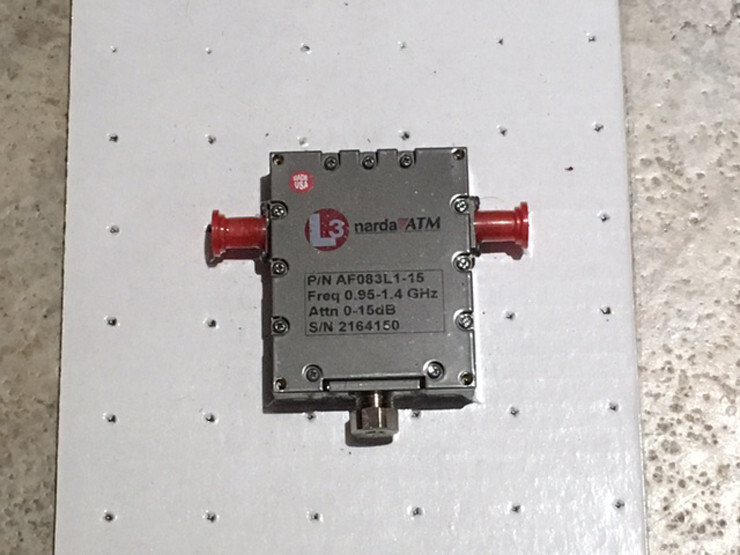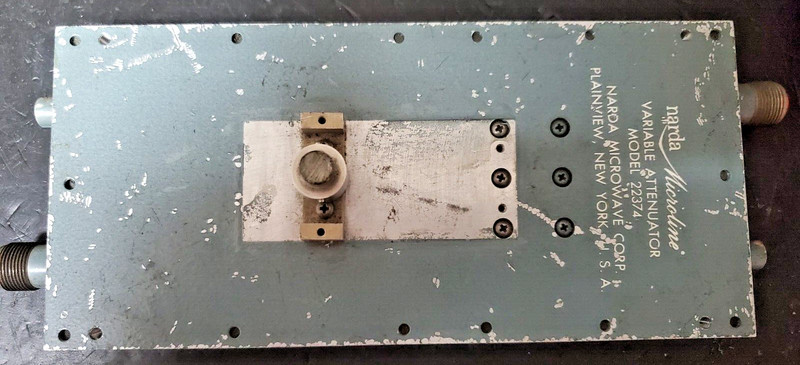
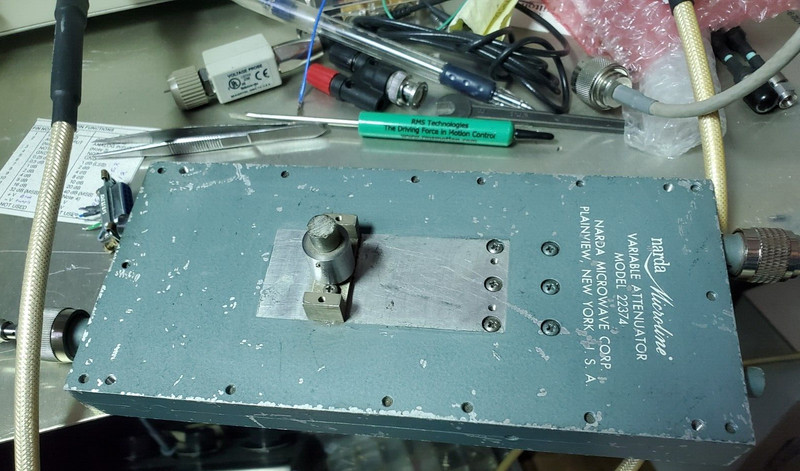
Narda 22374 Variable Attenuator N-connectors TESTED (see plots) .5-15 GHz maybe?
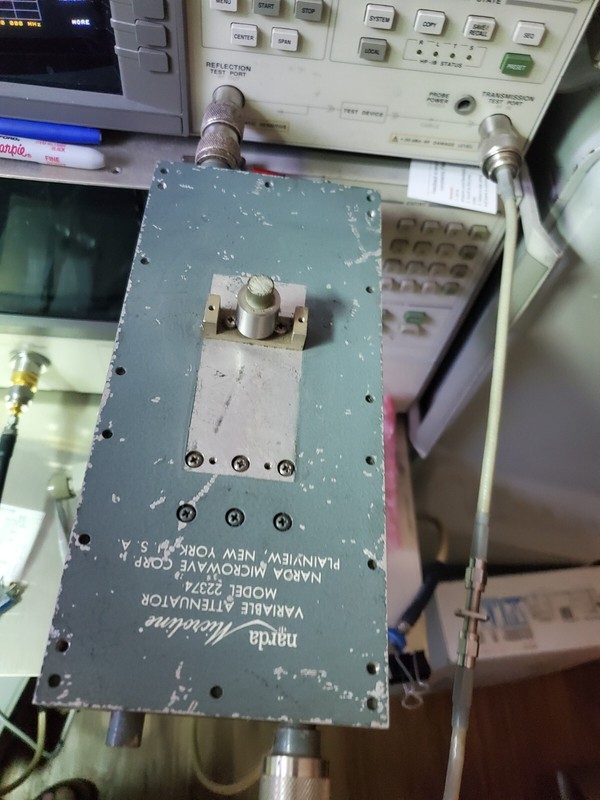
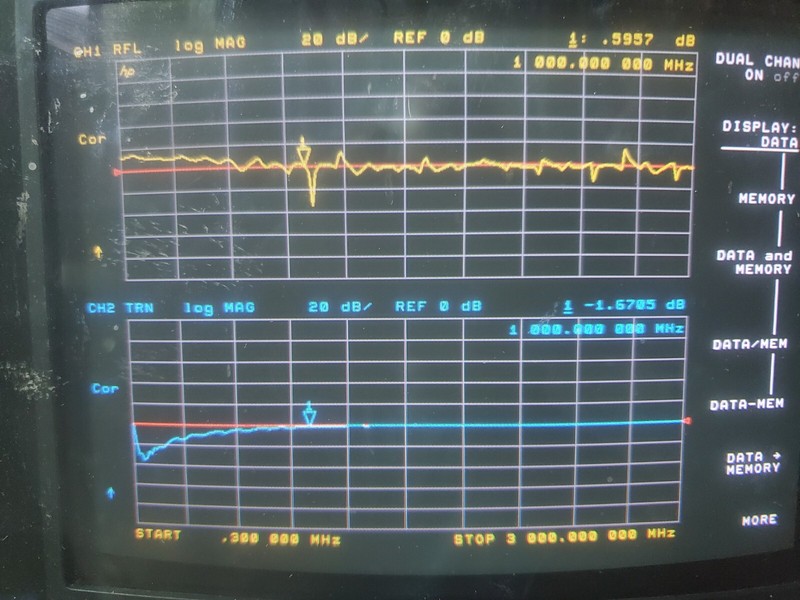
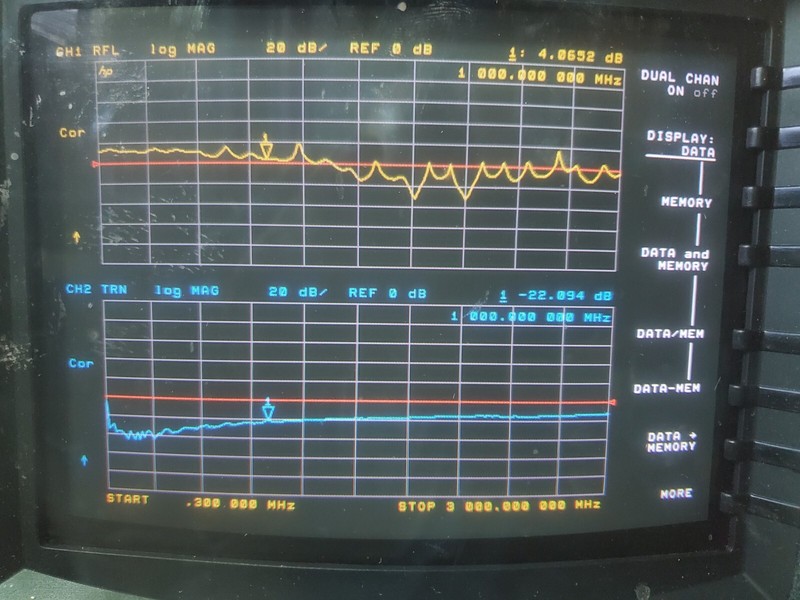
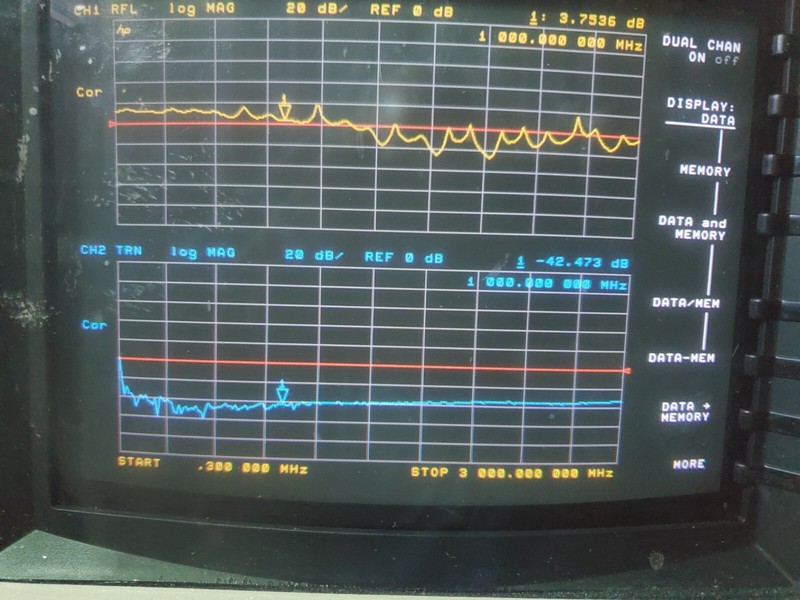
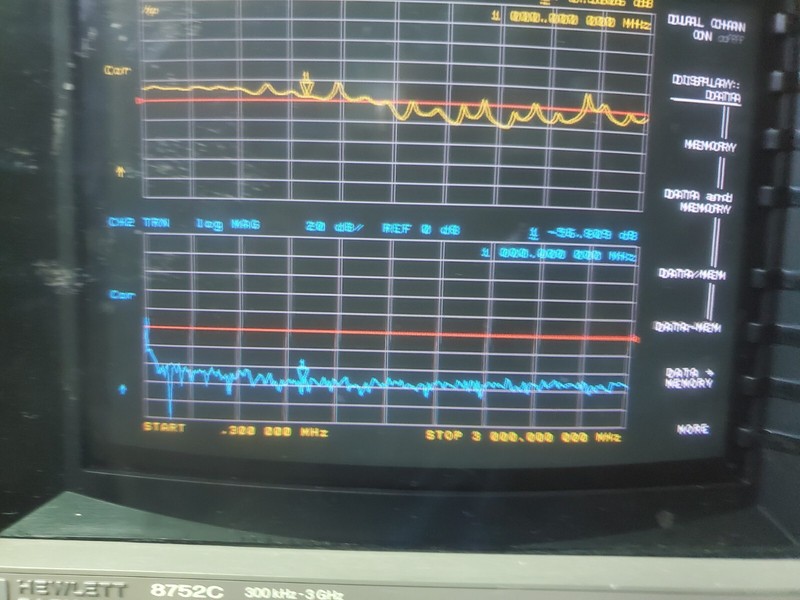
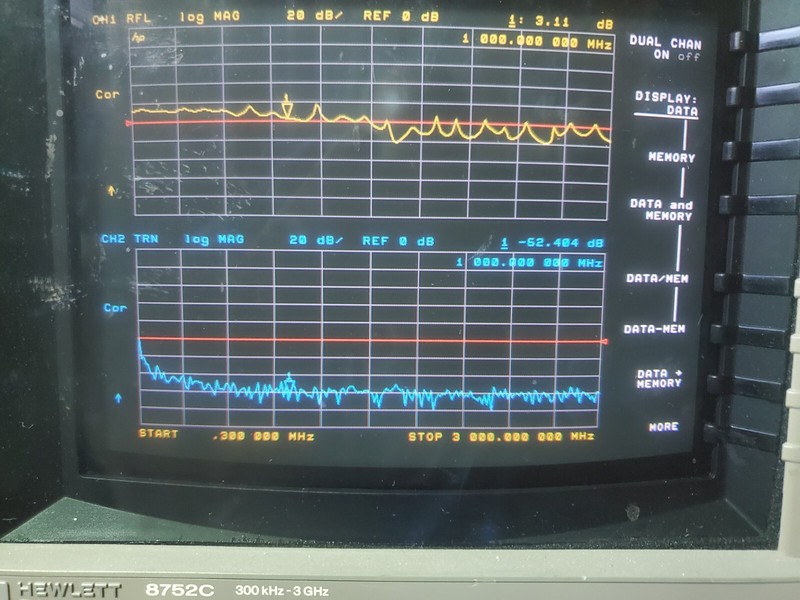
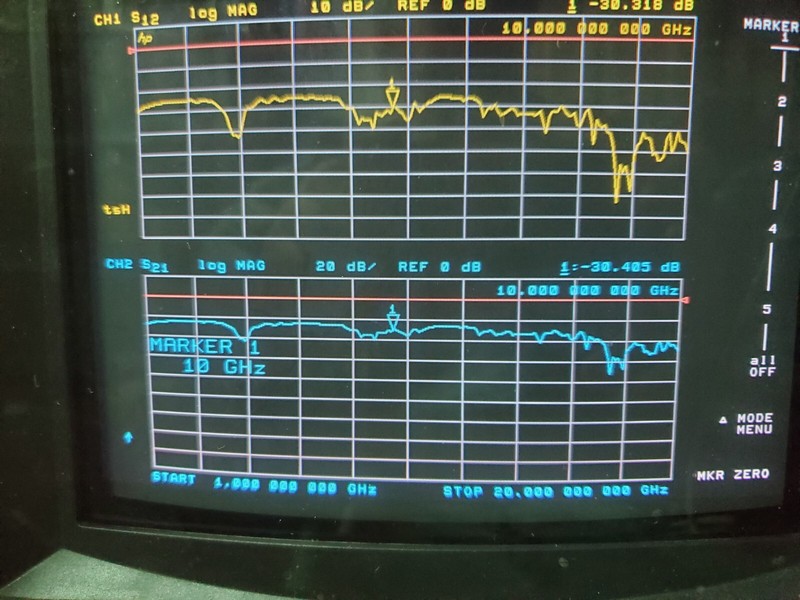
exact item shown, Narda variable attenuator 22374 - serial number 16 - maybe this is one of those rare collector's items (does anyone collect variable attenuators? now there's an obscure collection!). I looked for way too long and I can't find any mention of this model and htere are no date stamps or other hints on it - it has N(F) connectors. I measured it via two network analyzers, so let me explain the sequence of photos - that way you can decide for yourself what the coverage is.in general, the photos show a test setup and then the results, so I can remember what I did when I write description, and it makes it easy for you to follow alongFirst analyzer, HP 8752C (.3 to 3 GHz test range, and that's what I tested)first photo - unit connected to Analyzer, M-M connector on input and some cables on the outputnext series of 5 photos. Increasing attenuation, I put a marker at 1 GHz so you can follow along, it is working well in the 1-3 range so I decided to try higher freqnext photo, test setup to connect to HP 8720B that goes to 20 GHz .... you will see that this attenuator doesn'tnext photo - set to minimum attenuation, but did not calibrate the cables and stuff - too weird looking, so let's calibrate the through pathsnext photo three adapters to calibrate the through path - I couldn't find my M-M adapter, but this should be better than nothingnext photo, with the test setup before calibrationnext photo, with the test setup after calibration - note that the calibration now includes cancelling out any artifacts of the three adapters in series, so it's not a "lab quality" calibration, so some ripple in the measurments that follow is probably not real.Now, the test setup for measuring the attenuator - note adapters (need to connect from SMA to N), which will introduce some ripple but at least we can get some idea of performancefinally the test at higher friequencies. Now we measure at min through max attenuation, note marker at 10 GHz - I think the spike right at 10 GHz is probably a setup artifact, but that's where I chose to measure. you can see I aimed for minimum, 10, 20, 40, max (watch the blue trace, the other shows the reverse path)Based on this data, the through path goes insane around 16 GHz, those huge swings are not test equipment artifacts, so this unit is good from 1 to somewhere in the 10 to 15 dB range.I have a fairly large dial from an old piece of HP equipment that was submerged in rainwater for a few months - that would give you a cheap way to calibrate this for your setup - scribe a line on the aluminum case and write down what values on that dial mean what (or paste a paper ring over the dial and mark it up to your needs. - I've priced it as if the attenuator were free and the price is to measure it. Note to me: 4th thin drawerI normally ship within 24 hours of your order, but the post office does not always initiate tracking when I put the packages in the drop off box. Check out my other items!
Specifications
| Return Shipping Will Be Paid By | Buyer |
| All Returns Accepted | Returns Accepted |
| Item Must Be Returned Within | 30 Days |
| Refund Will Be Given As | Money Back |
| Brand | Narda |
| Frequency Range | .5-15 GHz? |
| Unit Type | Unit |
| Attenuation Range | 0-60? |
| MPN | 22374 |
| Country/Region Of Manufacture | United States |
Seeing the Narda name here reminds me of steady lab instruments and consistent performance.